
Possums are most active at night. Heavy thumping or footsteps, hissing, growling or a throaty cough, and droppings or urine stains around the roofline are common signs. Rats tend to make lighter scampering and gnawing sounds and high-pitched squeaks. Tell us what you're hearing and when, and we'll help work out what's there.
Homes & businesses
Possum Removal in Melbourne
Possums in the roof. Handled humanely.
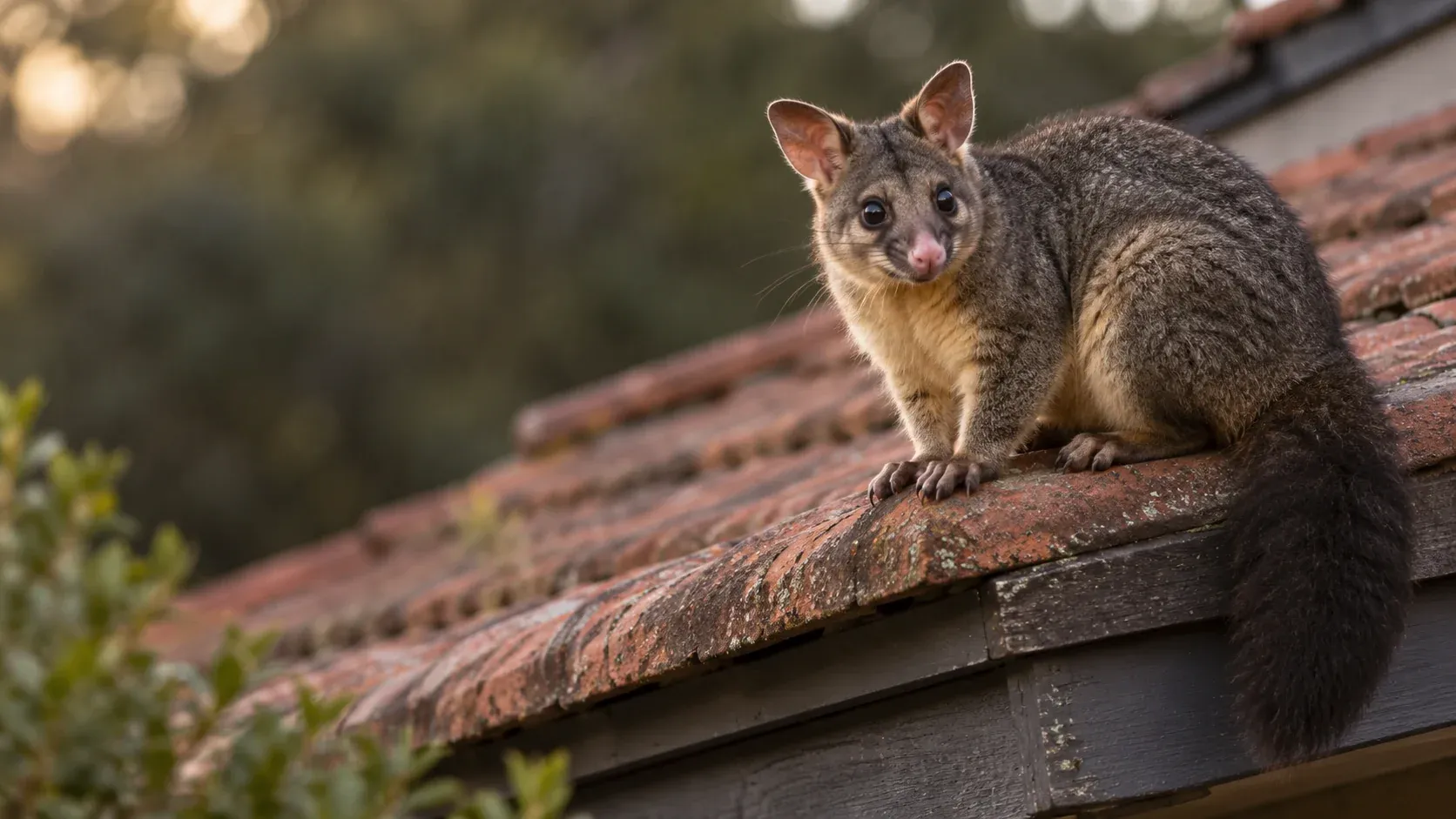
Humane possum removal for Melbourne homes and businesses. We find how brushtail and ringtail possums are getting into the roof, help them out in line with Victorian wildlife rules and close the way back in.
Same-day service
Available 7 days a week
Free quotes
Upfront, with no hidden fees
Licensed & insured
Family-run and local
- Five-star reviewsRead a client review
01The problem
Signs of a possum in the roof
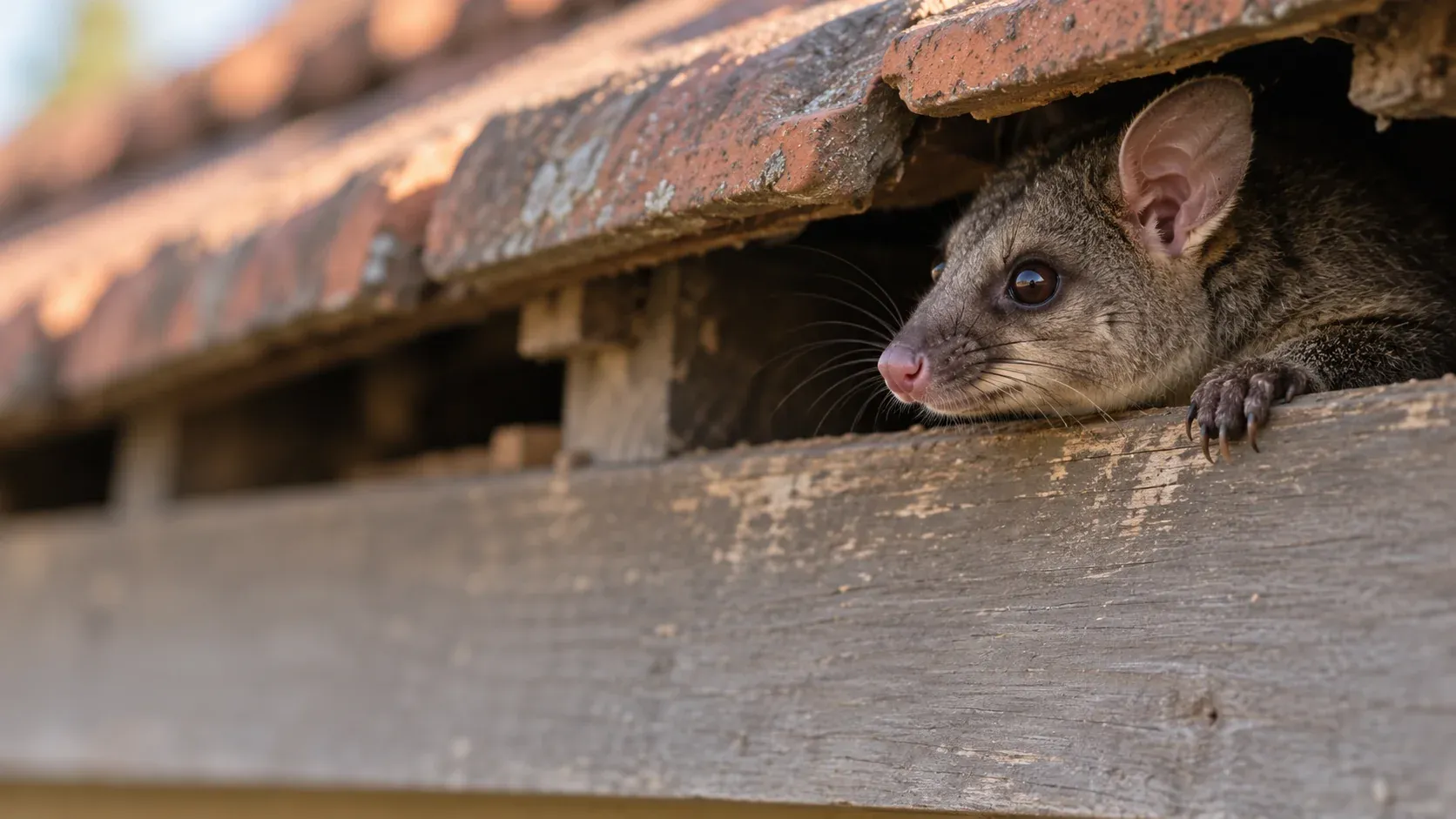
Brushtail possums need a dark, dry place to sleep during the day, and in the suburbs that's often a roof. A loose tile, broken eave or gap where the gutter meets the roof can be all they need. They head out after dark to feed and come back before dawn, which is when you're most likely to hear them.
Not every noise in the roof is a possum, though. Rats make lighter scampering and gnawing sounds, while possums thump, hiss and growl. Possums are protected native wildlife in Victoria, so getting on top of the problem starts with confirming what's up there and finding how it's getting in.
What to look for
- Heavy thumping or footsteps in the ceiling at dusk, during the night or just before dawn
- Hissing, growling, screeching or a deep, throaty cough from the roof
- Urine stains on the ceiling, or a strong smell in one part of the house
- Droppings around the roofline, on paths and decks or in the roof space
- Scratch marks, staining or fur around gaps at the eaves, gutters or roof tiles
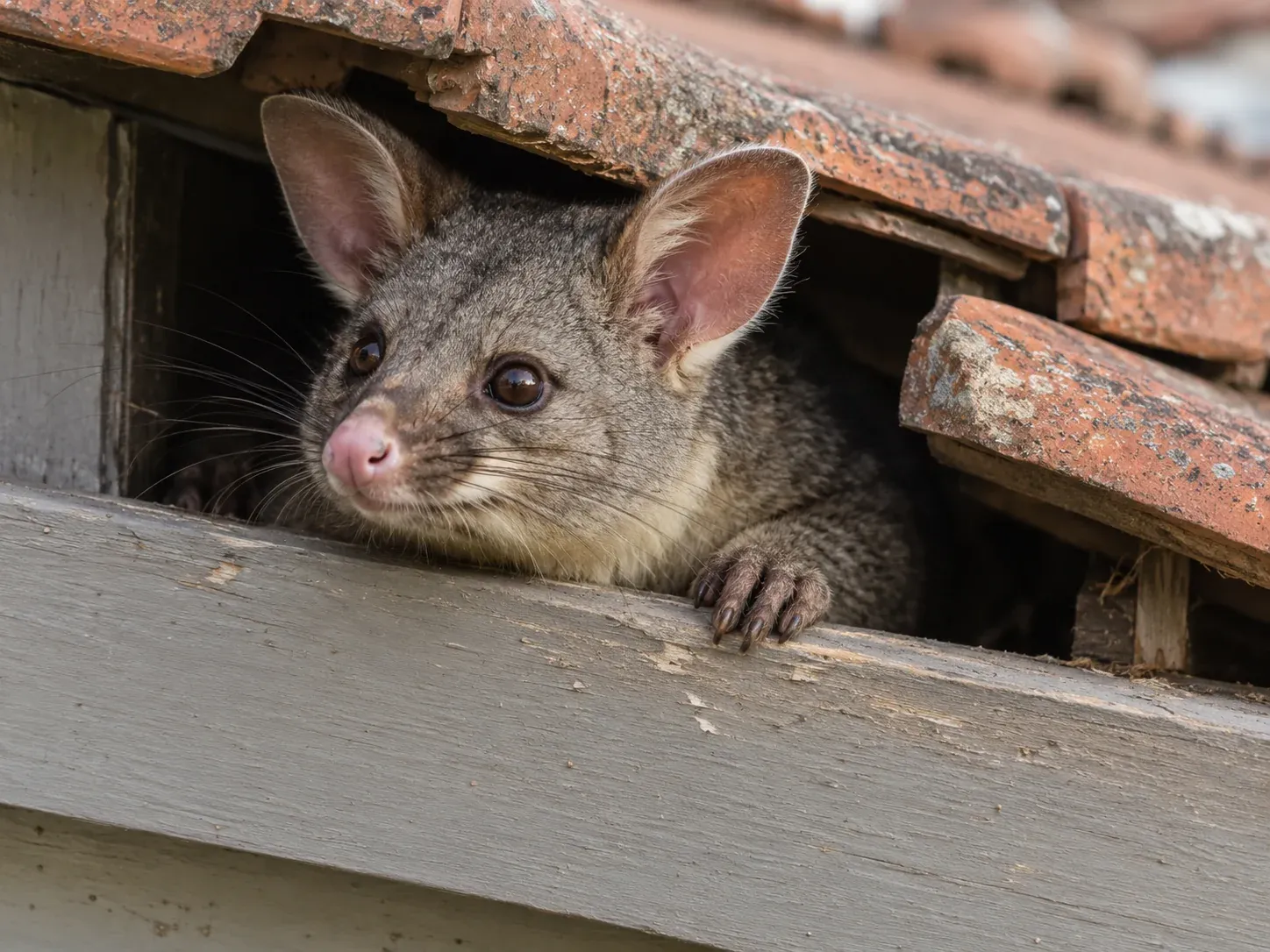
A secure roofline.
Common possum species in Melbourne
Two possums are common in Melbourne's suburbs: the common brushtail and the common ringtail. Both are protected native wildlife, but they shelter differently and the rules for each differ, which changes how we deal with them.
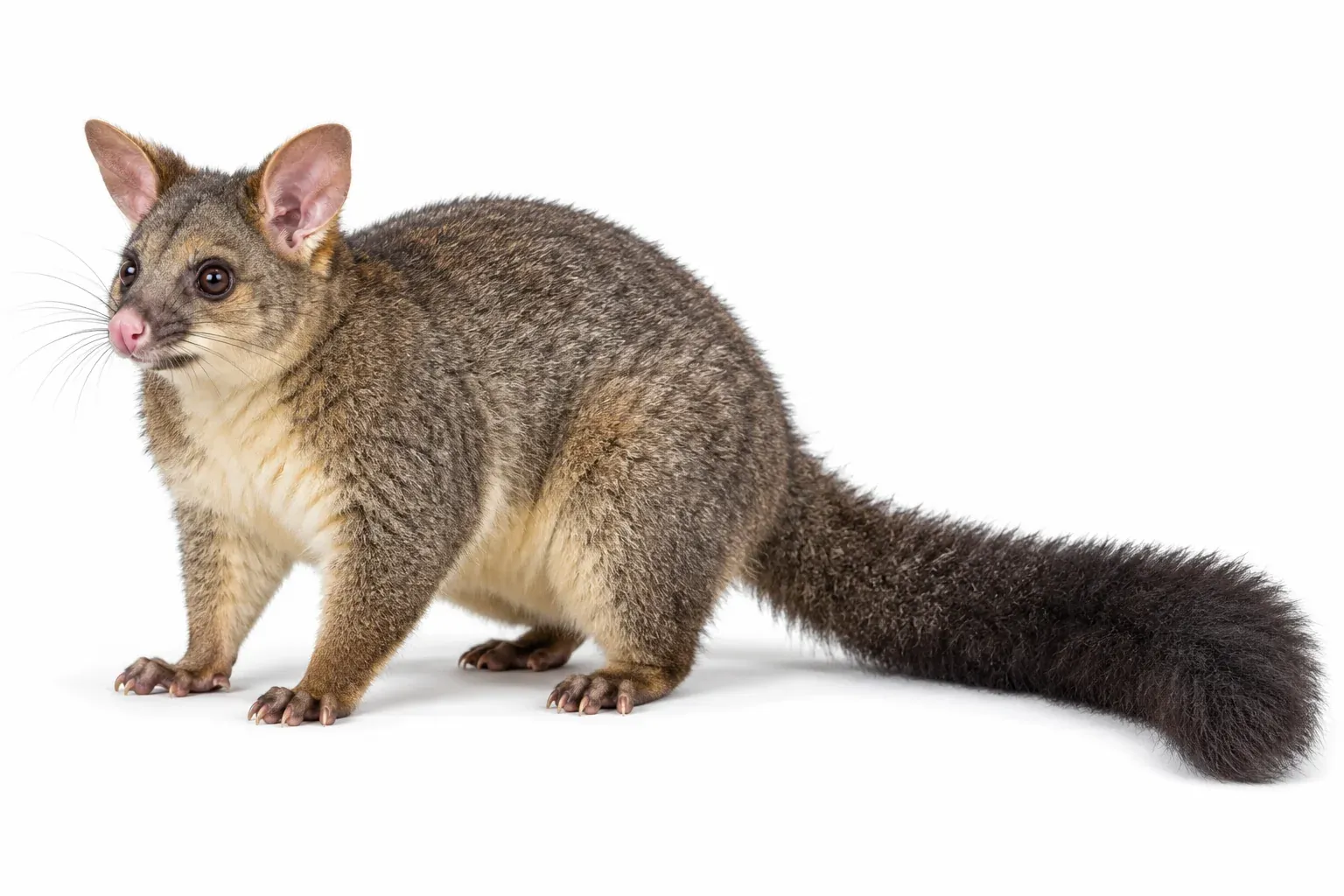
Common Brushtail Possums
The possum most likely to be living in your roof.
- Look for
- About the size of a cat and up to around 4 kg, with grey fur, a paler belly, large pointed ears, a pink nose and a thick, bushy black tail.
- Found in
- Tree hollows in the wild, but with fewer hollows in the suburbs they often den in roofs, chimneys, garages and sheds. They sleep there by day and head out after dark to feed on leaves, flowers and fruit.
- Treatment focus
- Brushtails can't be relocated and are territorial, so a possum shut out of the roof will try to get back in. Removal centres on a one-way flap over its way in, then sealing the roof, with a nest box nearby where it suits the property.
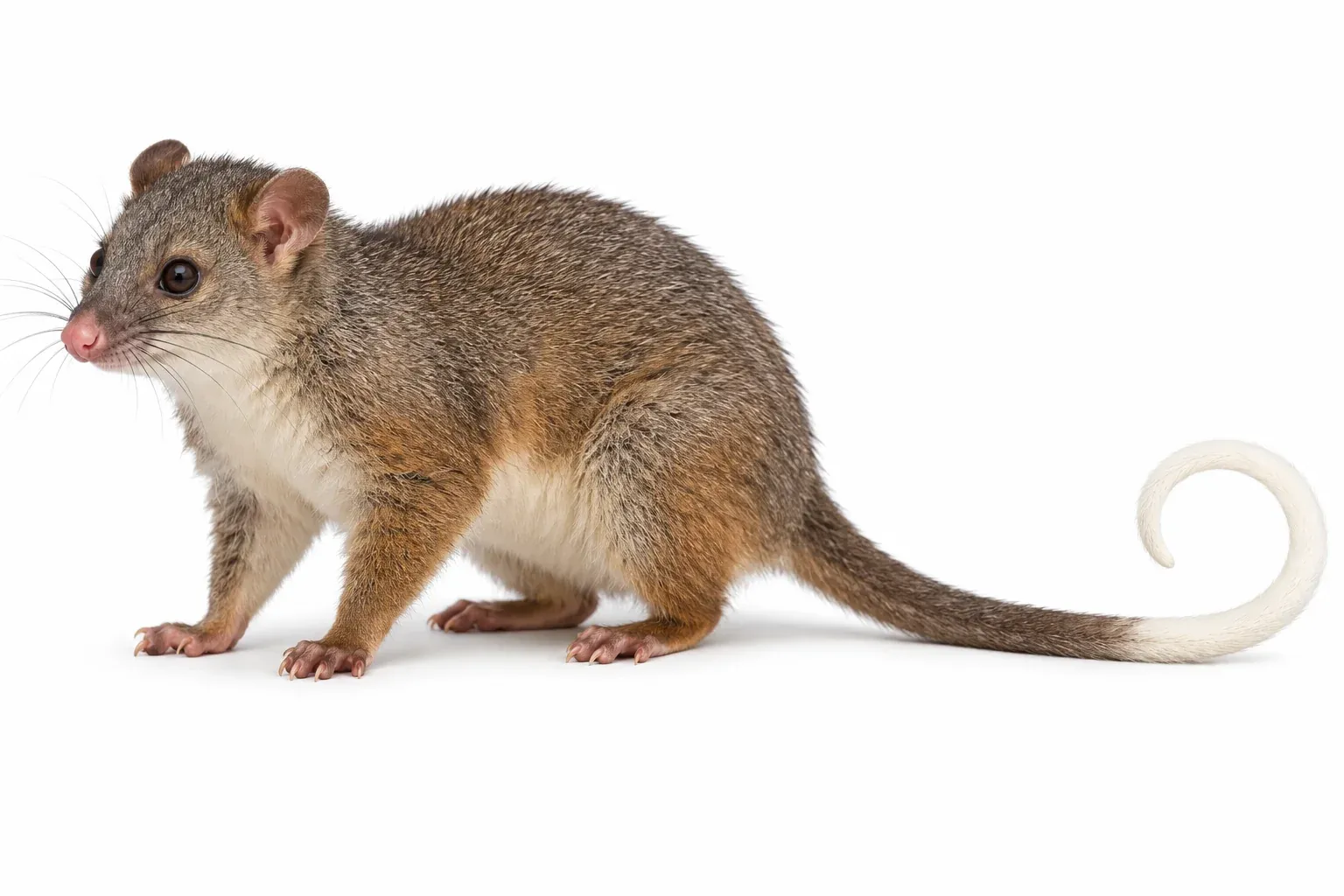
Common Ringtail Possums
Smaller possums that usually nest in trees.
- Look for
- Smaller, under 1 kg and about the size of a young kitten, with grey, brown or reddish fur, a lighter chest and a thin tail with a white tip that curls like a ring.
- Found in
- Usually a drey, a ball-shaped nest of woven grass, twigs and leaves in dense shrubs and trees. They live in family groups and less often move into roofs and sheds.
- Treatment focus
- It's illegal to trap a ringtail without a permit, so if they're in the roof, removal relies on one-way flaps and sealing the entry points.
Are possums in the roof a problem?
Possums rarely harm people, but a possum living in the roof is more than a nuisance. It returns to the same den every morning, and the longer it stays, the more mess builds up above your ceiling.
Noise and lost sleep
Possums are most active at night. Thumping, scratching and screeching fights in the ceiling can go on from dusk until dawn, disturbing sleep and setting dogs barking.
Urine stains and odour
A possum that dens in the same spot builds up urine and droppings over time. They can stain ceilings and leave a strong smell that lingers in the house.
Damage to the roof and ceiling
Possums get in through loose tiles or roofing iron, broken eaves and holes in timber or brickwork, and those gaps stay open to the weather until they're repaired. In rare cases, fighting possums can damage ceiling plaster.
Protected wildlife
Possums are protected under the Wildlife Act 1975. Harming them, relocating them or trapping a ringtail without a permit is illegal, and a frightened possum can scratch and bite, so it's worth getting advice before trying to move one yourself.
02Our approach
How we remove possums humanely
A possum in the roof can't simply be taken away. Possums are protected in Victoria, and a brushtail removed from a building must stay on the same property, within 50 metres of where it was caught. Possums moved somewhere unfamiliar are often attacked by other possums and may die.
So lasting results come from closing the way back in. We find every entry point, from loose tiles and broken eaves to gaps at the gutter, help the possum out, usually with a one-way flap, and seal the roof once it's clear.
Humane approach
In line with Victorian wildlife rules.
Entry points found
Start with how they get in.
Roof proofing
Help keep possums outside.
Treatment methods
Most possum jobs combine more than one method. Which ones suit your property depends on the species, how many ways in there are and the condition of the roof.
One-way flaps
A metal or Perspex flap hinged at the top goes over the possum's entry point. It lets the possum out when it leaves to feed after dark but stops it getting back in, and the surrounds are covered so its claws can't grip.
Used forBrushtail and ringtail possums using an entry point we can reach
Cage trapping and release
Where a one-way flap isn't practical, a brushtail can be caught in a humane cage trap. The trap is checked early the next morning and kept sheltered, and the possum is released after sunset that day on the same property, within 50 metres of where it was caught.
Used forBrushtail possums only, where a one-way flap isn't practical
Sealing entry points
Once the possum is out, we close the way back in: loose tiles or roofing iron, broken eaves, gaps where the gutter meets the roof and holes in timber or brickwork. Sealing has to be thorough, because a possum shut out of its den will look for another way in.
Used forEvery job, once the roof is clear
Nest boxes
A nest box mounted in a tree in the garden gives a brushtail somewhere else to den once it's out of the roof. Brushtails are territorial, so one living in the box can keep other possums away.
Used forProperties with a suitable tree, mainly for brushtails
Follow-up checks
A follow-up check confirms the roof is quiet, the repairs are holding and no possum is shut inside, and lets us deal with any new way in a possum has found.
Used forRoofs with several entry points, and when the noise comes back
Access and proofing advice
Possums can jump a long way down but not far across, so we point out the branches, fences and power lines that lead them to the roof. Trimming branches to leave at least 1.5 metres from the roofline cuts off a common route.
Used forEvery job, for homes and businesses
03Treatment process
Our possum removal process
Know what to expect at every step, from confirming it's a possum in the roof to helping it out humanely and closing the way back in.
Inspection
We confirm it's a possum rather than rats, check the roof space and roofline for how it's getting in, and look for what's leading it there, from overhanging branches to loose tiles.
Removal
We help the possum out of the roof humanely, usually with a one-way flap over its entry point, in line with Victorian wildlife rules, and explain the plan and timing before we start.
Proofing and prevention
Once the roof is clear, we seal the entry points and give you practical advice on branches and nest boxes, and let you know if a follow-up check is recommended.
Start with a free quote.
Tell us what you're seeing and we'll recommend the next step.
Before your visit
Preparing for possum removal
A little information before the visit helps us find the possum's way in quickly. What's needed depends on your property and the methods we'll use, so we'll confirm the preparation for your booking before the visit.
Note what you're hearing
Note where in the ceiling you hear the possum and roughly when, such as at dusk, through the night or just before dawn. If you've seen where it comes and goes at dusk, let us know.
Roof access
Make sure we can get to the manhole or roof access, and clear stored items from beneath it. Let us know if there's no internal access, or if the roof space is hard to get into.
Outside access
Unlock side gates and make sure we can get around the house to check the eaves, gutters and roofline. Tell us about second storeys, steep roofs or anywhere a ladder is hard to set up.
Pets
Keep dogs and cats inside or away from the work area during the visit, and tell us about pets that are outside at night, when possums are out of the roof.
Leave the entry point open
Don't block gaps or set traps before the visit. Sealing a gap while a possum is inside can shut it in the roof. If you've already set a trap or tried a repellent, let us know.
Preparation instructions depend on your property and the methods we'll use. Always follow the instructions we give you for your booking.
After your visit
What to expect after possum removal
Results depend on the species, how many ways in there are and the condition of the roof. We'll explain what to expect for your property before we leave.
When the roof goes quiet
Possums leave the roof every night to feed, so once a one-way flap is in place, a possum usually goes out within a night or two and can't get back in.
Why you may still hear possums
A possum that's lost its den often stays close by, so you may hear it on the roof or in nearby trees for a while as it looks for a way back in. Noise inside the ceiling can mean a second possum or another entry point, and sometimes it turns out to be rats.
Why a nest box helps
A brushtail that can't get back into the roof will look for another den nearby. A nest box in the garden gives it somewhere to go, and because brushtails are territorial, one living in the box can keep other possums away from your roof.
How you can help
Keep branches trimmed back at least 1.5 metres from the roof, watch for loose tiles and broken eaves, and don't feed possums, which draws more of them to the area. Repellents and ultrasonic devices do little to deter possums.
When to contact us
Get in touch straight away if you hear scratching or calling inside the ceiling after the roof is sealed, as an animal may be shut inside. Contact us too if the noise comes back, a flap or repair is damaged, or you're unsure about any of the aftercare advice.
04Homes & businesses
Possum removal for homes and businesses
Brushtail possums den wherever they find a dark, dry space, from the roof of a family home to a garage, shed or shop ceiling. The approach is the same, but access, timing and the building itself differ.
Homes
Houses, townhouses, units and rentals, with the visit focused on the roof space, eaves and roofline, along with any garage or shed where possums are sheltering.
- Access
- We'll need to reach the roof space through the manhole and get around the outside of the house to check the eaves, gutters and roofline.
- Scheduling
- Book a time that suits you. Same-day service is available 7 days a week.
- Preparation
- Note what you're hearing and clear the roof access as described in preparing for possum removal, with advice for pets.
- Units and rentals
- Possums can move between connected roof spaces, so let us know if neighbours are hearing them too. If you're renting, let your landlord or agent know, as repairs to the roof usually need their approval.
Businesses
Shops, offices, warehouses and other commercial premises, with a plan that suits your building, staff and customers.
- Scheduling
- Inspections and work can be planned around trading hours, such as before opening or after close, to limit disruption.
- Access
- We may need access to ceiling spaces, storerooms and plant rooms, and to the roofline outside. Staff may need to clear storage beneath the access points.
- Building managers
- In leased or shared premises, let us know who manages the building, so repairs to entry points can be approved before work begins.
- Food areas
- Possum droppings and urine above a kitchen or storeroom are a hygiene problem, and food safety standards require food businesses to keep animals and pests out of food areas, so it pays to act on the first signs.
Local service
Local possum removal in Melbourne
We help with possums in homes and businesses across Melbourne's western suburbs, from Footscray, Williamstown and Altona out to Point Cook, Werribee, Caroline Springs and Melton. We also cover the wider Melbourne area.
Trees, fences and power lines close to the house give brushtail possums an easy path onto Melbourne roofs, and they're active all year. Most young are born in autumn and spend around six months in the pouch before riding on their mother's back, so we keep young in mind before sealing a roof.
Looking for local service? Our Caroline Springs pest control page covers the suburb and nearby Taylors Hill, Burnside and Hillside.
Where we work
- Inner west
- Williamstown & Altona
- Sunshine & Keilor
- Point Cook & Werribee
- Caroline Springs & Melton
Local area guides
- Pest control in Caroline Springs
- Pest control in Burnside
- Pest control in Burnside Heights
- Pest control in Taylors Hill
- Pest control in Hillside
- Pest control in Ravenhall
- Pest control in Fraser Rise
- Pest control in Deanside
- Pest control in Plumpton
- Pest control in Melton
- Pest control in Deer Park
- Pest control in Cairnlea
- Pest control in Taylors Lakes
- Pest control in Sydenham

05Why choose Babylon
Local, licensed and ready to help.
You'll deal with a family-run Melbourne business, from your first call to the follow-up.
I recently had Babylon Pest Control treat my home and honestly couldn't be happier with the service. From start to finish, the communication was clear with Robin, professional, and super easy. The team arrived on time, explained everything in detail, and made the whole process stress-free. The results were amazing — they went above and beyond and you can tell they genuinely care about doing a proper job, not just rushing through it. Highly recommend Babylon Pest Control to anyone looking for reliable, honest and high-quality service. Five stars on everything.
- Family-run, with personal service on every job
- Fully licensed and insured technicians
- Same-day service available, 7 days a week
- Free, upfront quotes with no hidden fees
06 Common questions
Possum Removal FAQs
We find where the possum is getting in and out, then usually fit a one-way flap over the entry point. The possum leaves when it goes out to feed after dark, can't get back in, and we seal the roof once it's clear. Where a flap isn't practical, a brushtail can be cage-trapped and released on the same property after sunset. Ringtails can't be trapped without a permit.
See our approach for each method and when it's used.
Possums leave the roof every night to feed, so with a one-way flap in place, a possum usually goes out within a night or two. Roofs with several entry points, or more than one possum, can take longer and may need a follow-up check.
See what to expect after possum removal for why you may still hear possums nearby and how to help keep them out.
No. Possums are protected wildlife in Victoria, and relocating them isn't allowed. A brushtail possum removed from a building must be released on the same property, within 50 metres of where it was caught. Research shows possums released somewhere unfamiliar are often attacked by other possums and may die, so the focus is on helping the possum out of the roof and keeping it out.
Possums usually stay close to home. A nest box in a nearby tree can give a brushtail possum somewhere else to shelter once it's out of the roof, and because they're territorial, an occupied box may help keep other possums away. We can talk through whether a nest box suits your property.
Yes. Possums aren't harmed, and with a one-way flap the possum leaves on its own. Brushtail mothers carry a joey in the pouch for around six months and then on their back, so we keep young in mind before sealing a roof. The possum stays on your property, where it knows the area.
We'll confirm what's needed for your booking. It usually means noting where and when you hear the possum, clearing the area beneath the roof access, unlocking side gates and leaving the entry point open. Mention pets that are outside at night and any traps or repellents you've tried.
See preparing for possum removal for the full checklist.
The cost depends on the species, how many entry points there are, the type of roof and how easy it is to reach, the repairs needed to seal it and whether you'd like a nest box. A single gap at the eaves of a single-storey house, for example, is a smaller job than several entry points on a two-storey roof.
Request a free quote with your suburb, what you're hearing and where. We'll recommend the work needed and give you an upfront price, with no hidden fees.
Home owners and occupiers can humanely cage-trap a brushtail possum living in a building, but the rules are strict. The possum must be released after sunset on the day it's caught, on the same property and within 50 metres, the trap must be checked no more than two hours after sunrise, and the possum must be kept sheltered from sun, rain and pets. Ringtails can't be trapped without a permit.
Trapping on its own rarely solves the problem. The possum is released nearby and will move back in, or another will take its place, unless the way in is sealed.
It will try, because possums are territorial and stay close to their den. Blocking access is the reliable fix: sealing gaps, repairing loose tiles and broken eaves, and trimming branches to leave at least 1.5 metres between trees and the roof. Repellents and ultrasonic devices do little to deter possums. Contact us if you hear activity again after the work is done.
Yes. We help shops, offices and other businesses, with work planned around your trading hours, staff and customers. See homes and businesses for how a commercial visit differs.
We help with common brushtail and common ringtail possums, the two possums found around homes and businesses throughout Melbourne's west and north. Brushtails are the ones most often found living in roofs. We confirm what's there and recommend a plan for your property.
Can't see your question? Ask us, or call for a quick answer.
Ready for quieter nights?
Get your free quote today.
Tell us what you're hearing in the roof and how long it's been happening. We'll recommend the next step for your home or business in Melbourne's west and north.