Skip to content

Spider Treatment in Melbourne

Look beyond the web. Keep spiders out.

Professional spider control for Melbourne homes and businesses. We find where redbacks, black house spiders and other common spiders are building and sheltering and treat them there, with clear advice to help keep them outside.

01The problem

Signs of a spider problem

Some spiders build webs in sheltered corners and stay put, while others wander in at night as they hunt. You'll often notice webs around windows, eaves and outdoor furniture before you see the spiders themselves.

Most spiders around the home are harmless and help keep insects down outside. Webs that keep coming back, spiders regularly turning up indoors, or redbacks near where children play are worth dealing with. Getting on top of the problem starts with knowing which spiders you're dealing with and where they're sheltering.

What to look for

  • Webs that keep coming back around eaves, window frames, door frames and pergolas
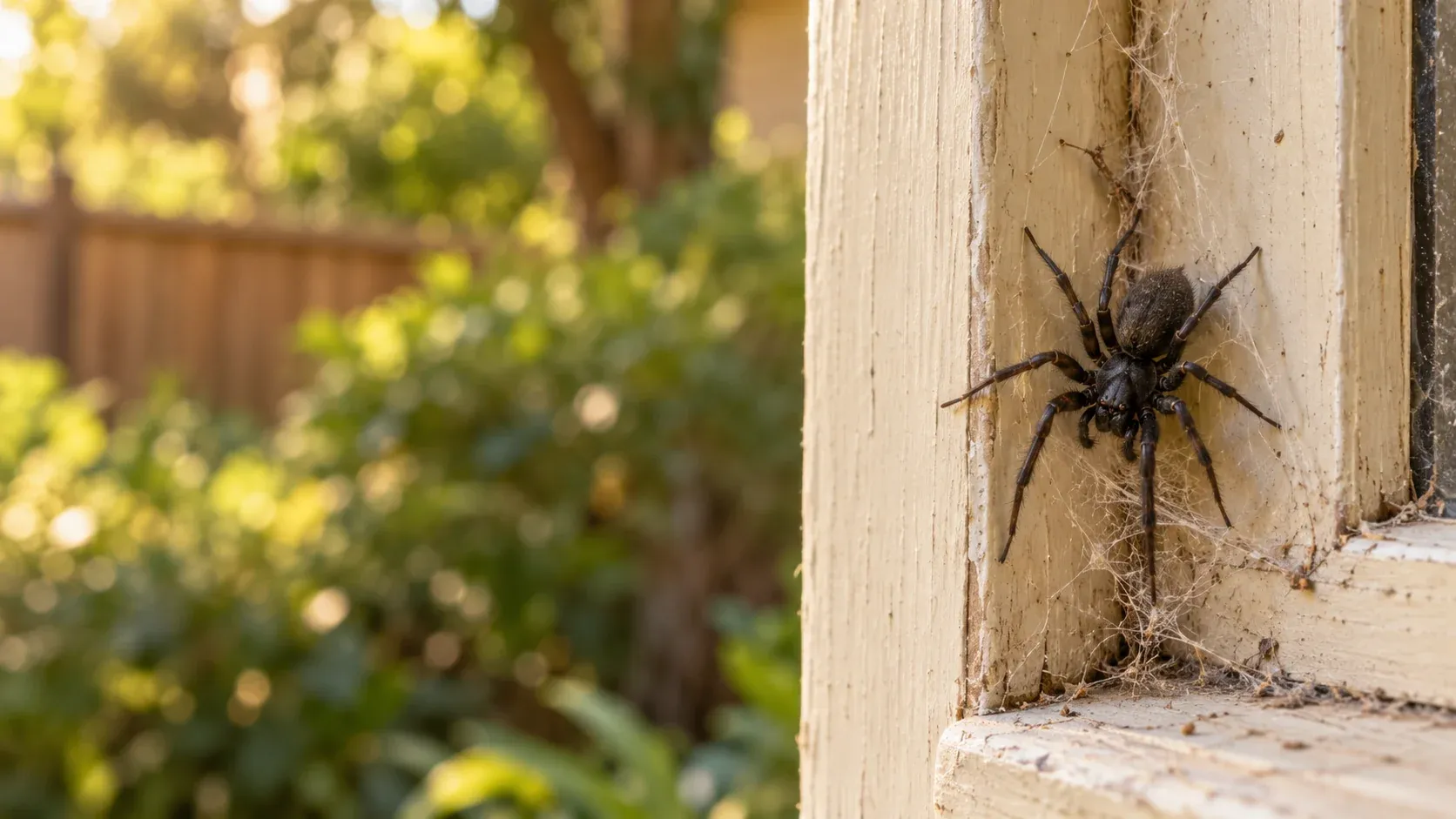
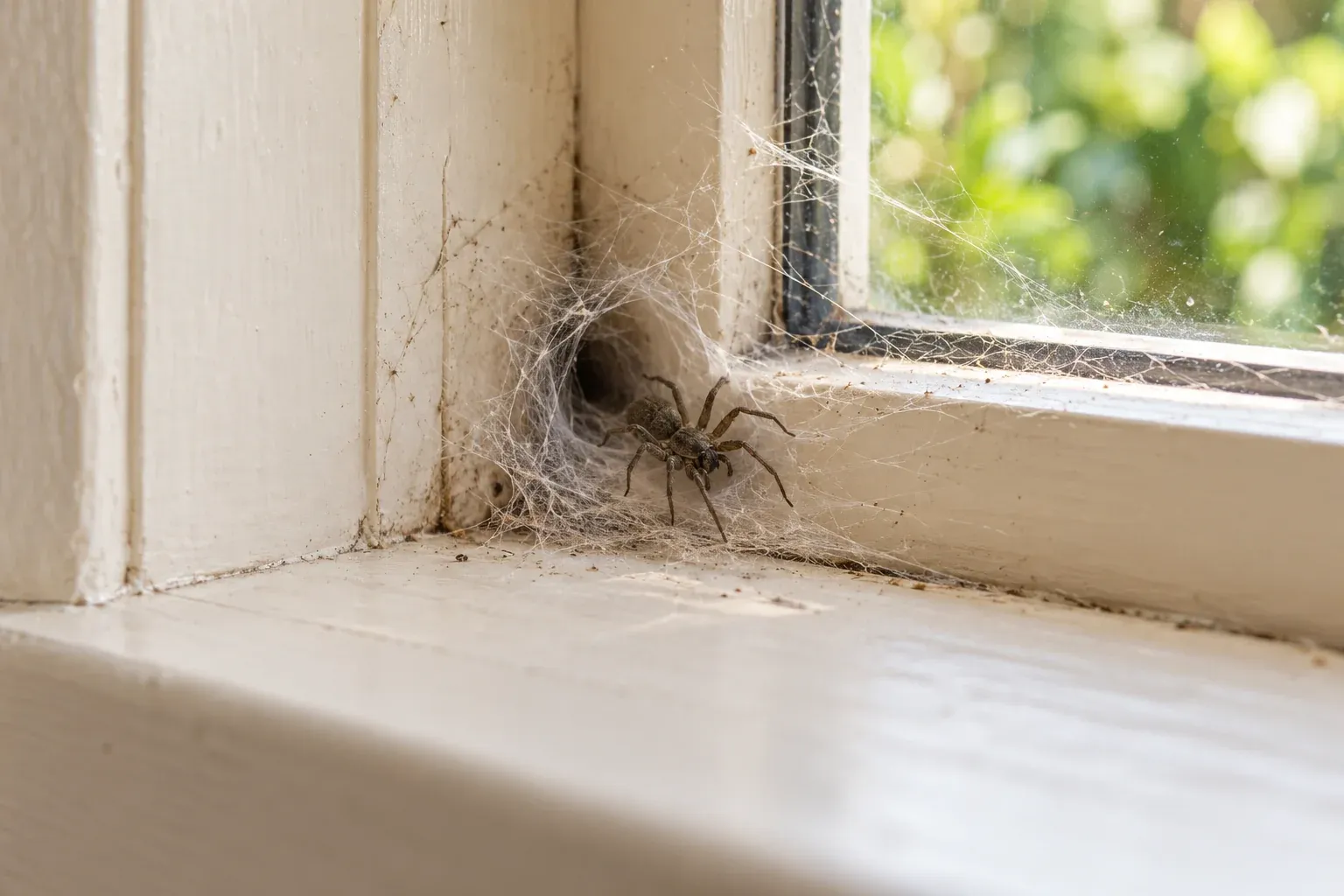
  • Lacy webs with a funnel-shaped retreat in the corners of windows, the mark of black house spiders
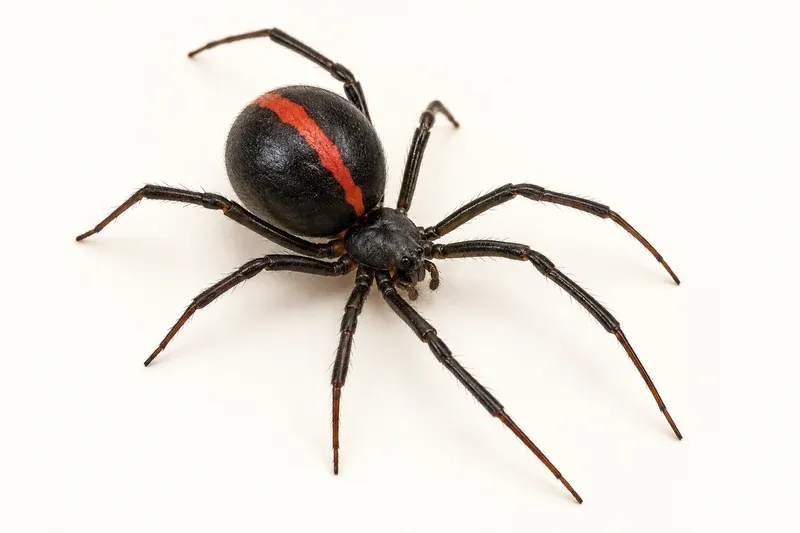
  • Untidy, tangled webs in dry, sheltered spots such as sheds, rockeries and junk piles, where redbacks build
  • Round egg sacs hanging in webs, or the flat, oval white egg sacs of huntsman spiders
  • Spiders turning up indoors, such as white-tailed spiders at night or huntsmen on walls
A black house spider beside a lacy funnel-shaped web in a cream timber window corner
Find where they shelter.
Keep them outside.

Common spider species in Melbourne

Redback, black house, white-tailed and huntsman spiders are among the spiders most often found around Melbourne homes and businesses. Some build webs and stay put, while others roam as they hunt, which changes where we look and how we treat.

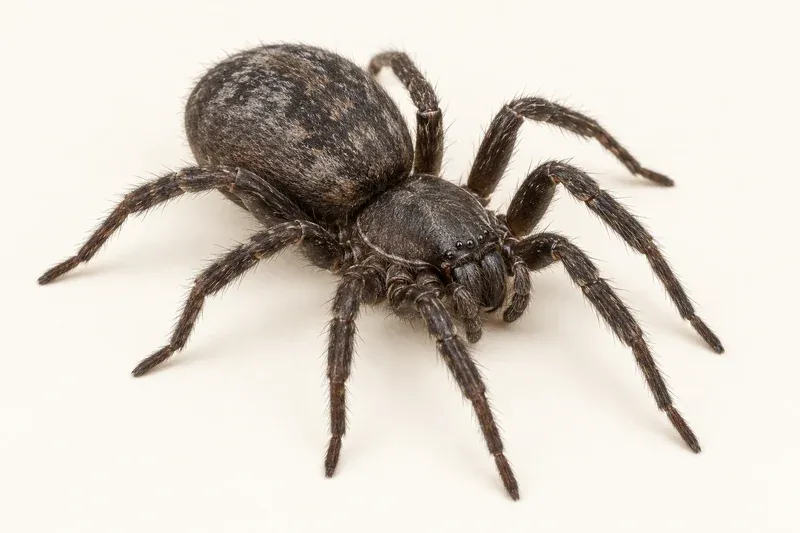
  • Black house spider with a dark oval abdomen and sturdy, finely haired legs

    Black House Spiders

    Window spiders with lacy, funnel-shaped webs.

    Look for
    Robust and dark brown to black, with black legs and a large abdomen. Females grow to about 18 mm long and males to about 9 mm. They're often called window spiders.
    Found in
    Untidy, lacy sheets of silk with a funnel the spider sits in, built in window frames, wall crevices, tree bark and logs. They're common in built-up areas and feed on flies and mosquitoes.
    Treatment focus
    Treatment pairs removing webs and egg sacs with treating the window frames, eaves and crevices where they build, along with advice on outdoor lights that draw in the insects they feed on.
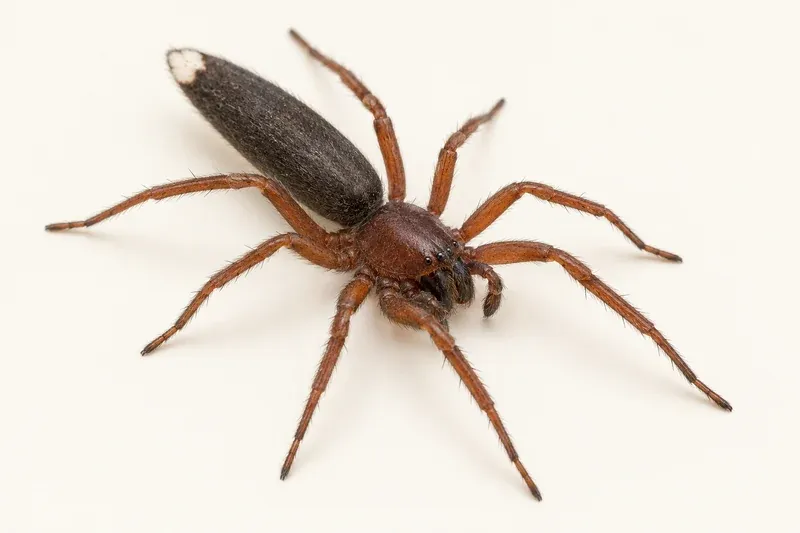
  • White-tailed spider with an elongated dark abdomen and a white tip

    White-tailed Spiders

    Night-time hunters that often wander indoors.

    Look for
    Grey to black, with a long, cigar-shaped body and a white mark at the tip of the abdomen. Females are about 18 mm long and males about 12 mm.
    Found in
    Under bark and logs and in leaf litter, but they often come indoors. They don't build webs, and wander at night hunting other spiders, including black house spiders.
    Treatment focus
    With no web to treat, treatment focuses on the gaps they come in through and the places they shelter, along with the black house spiders and other spiders they feed on.
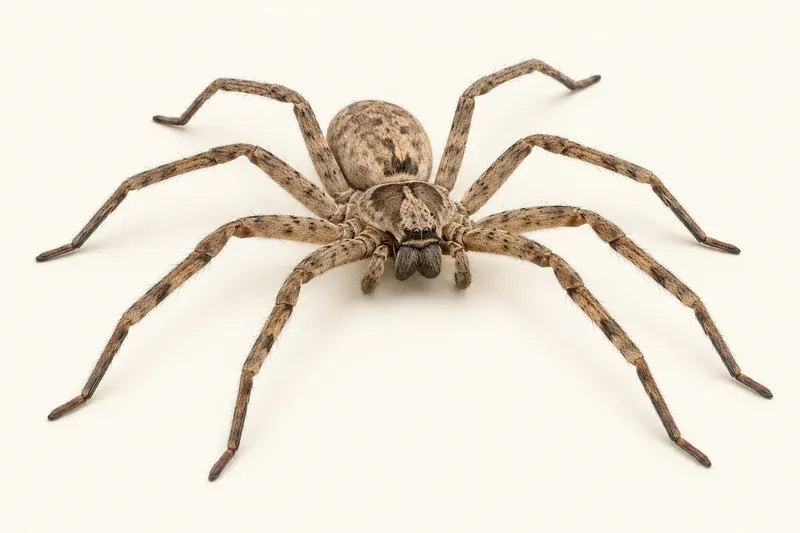
  • Brown huntsman spider with a flattened body and long, sideways-spreading legs

    Huntsman Spiders

    Large, fast and mostly harmless.

    Look for
    Very large, with a leg span of up to 15 cm. Usually brown or grey, sometimes with banded legs, and the two front pairs of legs are much longer than the back two.
    Found in
    Under loose bark and rocks, in crevices and on foliage. They don't build webs, and they sometimes wander into houses and cars.
    Treatment focus
    They're generally harmless and their bites usually cause only short-lived pain, so treatment focuses on keeping them outside: treating the outside of the building and the gaps around doors, windows and eaves where they get in.

Are spiders dangerous?

Most spiders around Melbourne homes are harmless to people, and outdoors they help keep insects in check. A few can give a painful bite, and a female redback's bite can be serious, so it's worth knowing which spiders need care.

This is general information, not medical advice. If you're worried about a bite, see a doctor, and in an emergency call triple zero (000).

  • Redback bites

    Only the female redback's bite is dangerous. Early symptoms include escalating pain, local sweating, nausea and vomiting. Wash the bite with soap and water, apply a cold pack rather than a pressure bandage, which often makes the pain worse, and seek medical attention. Antivenom is available, and no deaths have been recorded since it was first produced in 1956.

  • Other house spiders

    Black house, white-tailed and huntsman spiders aren't aggressive and rarely bite unless they're touched or trapped against the skin, such as in clothing or bedding. Their bites can be painful, with local swelling. Wash the area with soap and water and apply a cold pack if it hurts.

  • White-tailed spiders and skin ulcers

    White-tailed spiders are often blamed for skin ulcers, but medical studies haven't confirmed a link. A study of 130 confirmed bites found no cases of the ulcers they're blamed for. Their bite is painful, and any blistering that occasionally follows may be due to infection.

  • When to get medical help

    Seek medical attention for any suspected redback bite, and for any other bite if symptoms develop or persist. Young children, older people and anyone with heart disease are most at risk. For a suspected funnel-web or mouse spider bite, apply a pressure bandage, keep the person still and call triple zero (000). For advice on any bite, call the Victorian Poisons Information Centre on 13 11 26, 24 hours a day.

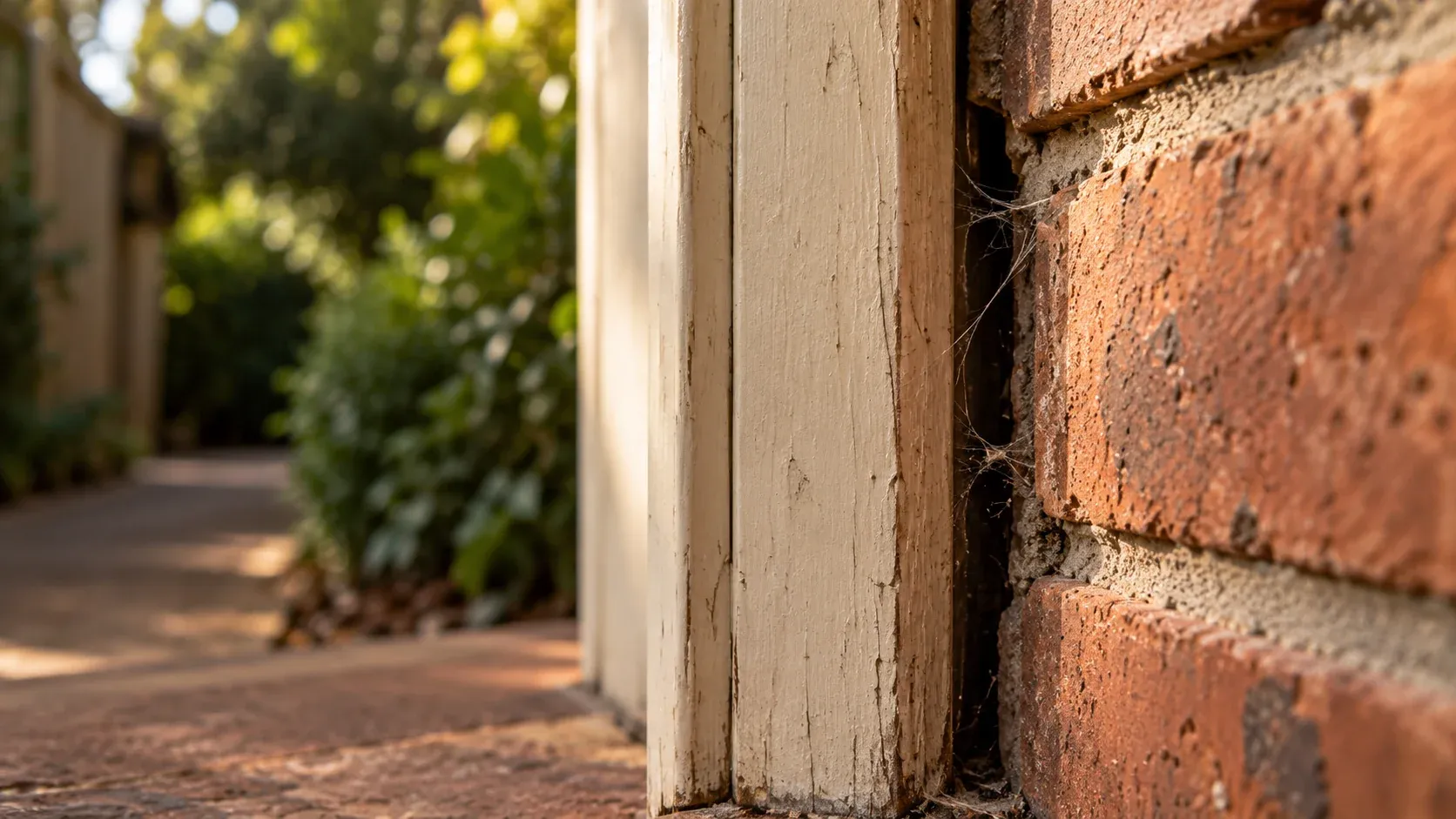
Spider silk around a sheltered gap between an exterior timber door frame and brickwork

02Our approach

How we treat spider problems

Spiders settle where they find shelter and insects to eat. Web builders such as redbacks and black house spiders stay put in sheltered corners, frames and eaves, while huntsman and white-tailed spiders don't build webs and roam as they hunt.

So no single treatment suits every spider problem. We match the methods to the species and where they're sheltering, treat the places they build and get in rather than spraying the whole garden, and look at the lights, gaps and clutter that keep drawing them back.

  • Targeted treatments

    Aimed at where they shelter.

  • Your home in mind

    Clear advice for families and pets.

  • Practical prevention

    Help keep spiders outside.

Most spider treatments combine more than one method. Which ones suit your property depends on the species, where they're building or sheltering, and how they're getting inside.

  • Web and egg sac removal

    We brush down webs and remove egg sacs from the eaves, window frames, pergolas and other areas we treat. Fewer spiderlings hatch, and it's easier to see whether new webs appear.

    Used forWeb-building spiders such as black house spiders and redbacks

  • Targeted residual treatments

    A residual insecticide applied to the eaves, window and door frames, external walls and other places spiders build and shelter keeps working after it dries, so spiders that return or cross those areas pick it up. We treat selected surfaces rather than spraying the garden, which can drive spiders indoors.

    Used forEaves, frames, external walls, fences, sheds and pergolas

  • Redback search and spot treatment

    Redbacks hide their webs in dry, sheltered spots that a general treatment can miss. We check under ledges, stored items, outdoor furniture and play equipment, and treat each web and its egg sacs directly.

    Used forRedbacks in yards, sheds and play areas

  • Roof, subfloor and storage areas

    Spiders shelter in roof voids, subfloors, garages and sheds, where they're rarely disturbed. These areas can be treated with a suitable dust or spray where spiders are active.

    Used forSpiders sheltering in voids, garages and sheds

  • Follow-up and seasonal treatments

    Spiders can move back in from gardens, trees and neighbouring properties while insects keep drawing them in. A follow-up visit or a regular treatment helps keep numbers down where spiders are an ongoing problem.

    Used forOngoing spider activity, and properties near parks, creeks and open space

  • Proofing and prevention advice

    We point out what's drawing spiders in and how they're getting inside, from outdoor lights that attract insects and clutter against the house to gaps around doors and windows and plants touching the walls, so changes at your property support the treatment.

    Used forEvery treatment, for homes and businesses

03Treatment process

Our spider treatment process

Know what to expect at every step, from finding where spiders are sheltering to practical changes that help keep them outside.

  1. Inspection

    We identify the species, find where spiders are building webs and sheltering, and look for what's drawing them in, from outdoor lights and insects to gaps around doors, windows and eaves.

  2. Treatment

    We treat the webs, hiding places and entry points that need attention, using methods suited to the species and your property, and explain any precautions before we start.

  3. Follow-up and prevention

    You'll get practical advice on screens, gaps, lights and clutter, and we'll let you know if a follow-up visit or regular treatment is recommended.

Start with a free quote.

Tell us what you're seeing and we'll recommend the next step.

Preparing for spider treatment

Good preparation lets us reach the places spiders build and shelter. What's needed depends on the methods we'll use, so we'll confirm the preparation for your booking before the visit.

  1. Leave the webs for now

    If you can, leave webs where they are until the visit, as they show us which spiders are around and where they're most active. Keep children and pets away from any redback webs in the meantime.

  2. Access outside

    Move outdoor furniture, toys, pot plants and stored items away from the walls, and make sure we can reach the eaves, window frames, pergola, fences, shed and side passages. Unlock side gates.

  3. Access inside

    Clear windowsills and the corners where you're seeing spiders, and make sure we can get to any roof or subfloor access. Let us know about areas that are hard to reach.

  4. Pets and household members

    Tell us about babies, children, pets, anyone who's pregnant or has asthma or allergies, and any fish tanks or birds. We'll explain whether anyone needs to stay out of particular rooms or parts of the garden, and for how long.

  5. Using treated areas afterwards

    Keep people and pets away from treated areas for the time we advise, and avoid hosing, washing or painting treated walls, eaves and frames. We'll tell you when you can use each area again.

Preparation and re-entry instructions depend on the products and methods used for your property. Always follow the instructions we give you for your booking.

What to expect after treatment

Results depend on the species, how many spiders are around and the methods used. We'll explain what to expect for your property before we leave.

  1. When you may notice a difference

    Fewer webs and spiders are often noticeable within days to a couple of weeks, as spiders return to or cross treated areas. Spiders that wander rather than build webs can take longer.

  2. Why you may still see spiders

    Seeing some spiders for a while can be normal. Affected spiders may come out into the open, spiderlings can hatch from egg sacs hidden out of reach, and hunting spiders such as huntsmen and white-tailed spiders can wander in from gardens, trees and neighbouring properties.

  3. Why spiders can return

    Spiders follow their food. While outdoor lights, gardens and nearby open space keep drawing in insects, new spiders can move in over the season, so properties with ongoing activity may benefit from a follow-up or regular treatment.

  4. How you can help

    Leave treated surfaces undisturbed and avoid spraying the garden yourself, which can drive spiders indoors. Keep flyscreens in good repair, fit weather strips to doors, trim plants back from doors and windows, clear clutter from around the house, and shake out shoes and clothing left outside or on the floor.

  5. When to contact us

    Get in touch if activity hasn't eased within the timeframe we discussed, if you find redbacks in a new spot, or if you're unsure about any of the aftercare instructions.

04Homes & businesses

Spider treatment for homes and businesses

Spiders settle wherever they find shelter and insects to eat, from family homes and backyards to shopfronts, offices and warehouses. The treatment principles are the same, but access, timing and the areas to treat differ.

  • Homes

    Houses, townhouses, units and rentals, with treatment focused on the eaves, windows, outdoor living areas, sheds and fences, plus any rooms where spiders are coming inside.

    Access
    We'll need to reach the outside of the house, including the eaves, windows, pergola or deck, fences, shed and side passages, plus roof or subfloor access if spiders are sheltering there.
    Scheduling
    Book a time that suits you. Same-day service is available 7 days a week.
    Preparation
    Clear access around the house as described in preparing for treatment, with advice for children and pets.
    Play areas
    Show us where children play. Redbacks favour dry, sheltered spots, so we'll check play equipment, toy storage and outdoor furniture closely.
  • Businesses

    Shops, offices, warehouses, cafés and other commercial premises, with a plan that suits your operations, staff and customers.

    Scheduling
    Treatment can be planned around trading hours, such as before opening or after close, to limit disruption.
    Access
    We'll need to reach entrances, awnings, signage, the building's eaves and external walls, and any storage areas, loading docks or ceiling spaces where spiders are active.
    Shopfronts and entrances
    Webs on awnings, signage and windows are often the first thing customers notice. Regular treatment helps keep the frontage clear.
    Storage and lighting
    Storerooms and loading docks are dark and rarely disturbed, so spiders settle easily, and lights near entrances draw in the insects they feed on. We'll suggest changes that help.

Local spider control in Melbourne

We treat spiders in homes and businesses across Melbourne's western suburbs, from Footscray, Williamstown and Altona out to Point Cook, Werribee, Caroline Springs and Melton. We also cover the wider Melbourne area.

Spiders are usually most noticeable in Melbourne's warmer months, when the insects they feed on are most active. Homes near parks, creeks and open space can see more insects around outdoor lights at night, and more spiders building webs nearby.

Looking for local service? Our Caroline Springs pest control page covers the suburb and nearby Taylors Hill, Burnside and Hillside.

Babylon's owner inspecting a rodent bait station beside a residential garden

05Why choose Babylon

Local, licensed and ready to help.

You'll deal with a family-run Melbourne business, from your first call to the follow-up.

Thanks to Robin, great job and on time. Highly recommended. I've had such a pleasant experience with this company. Good, honest and reliable service. Would recommend to all my family and friends.
Ninous ZayaGoogle review
  • Family-run, with personal service on every job
  • Fully licensed and insured technicians
  • Same-day service available, 7 days a week
  • Free, upfront quotes with no hidden fees

06 Common questions

Spider Treatment FAQs

Many people notice fewer webs and spiders within days to a couple of weeks. Spiders that wander rather than build webs, such as huntsmen and white-tailed spiders, can take longer, and you may see some spiders out in the open for a while after treatment.

See what to expect after treatment for why some activity can continue and how to help the treatment work.

Don't touch the webs, keep children and pets away, and wear thick gloves when gardening or moving stored items. Only the female redback's bite is dangerous, and antivenom is available. If someone is bitten, wash the bite, apply a cold pack rather than a pressure bandage and seek medical attention. Tell us where you've seen them, and we'll search the area and treat the webs and egg sacs.

It depends on the size of the property, the species and how many areas need treating. A treatment for the windows and eaves of a unit is usually quicker than one that covers a large house, sheds, fences and the roof or subfloor. We'll give you a time estimate when you book.

We'll confirm what's needed for your booking. It usually means leaving webs in place, moving outdoor furniture and stored items away from the walls, clearing windowsills, and making sure we can get to the garden, side passages and any roof or subfloor access.

See preparing for spider treatment for the full checklist, including pets and re-entry.

We use family-friendly, low-toxicity products applied by licensed technicians, and we treat selected surfaces where spiders build and shelter rather than spraying the whole garden. Tell us about children, pets, anyone with asthma or allergies, and any fish tanks when you book. We'll explain how to prepare, whether anyone needs to stay out of particular areas, and when you can use treated spaces again.

The cost depends on the species, how many spiders are around, the size and layout of the property, which areas need treating and whether a follow-up or regular treatment is needed. Black house spiders around the windows of a unit, for example, need a different treatment from redbacks across a large backyard with sheds and play equipment.

Request a free quote with your suburb, where you're seeing spiders and how long you've noticed them. We'll recommend a treatment and give you an upfront price, with no hidden fees.

White-tailed spiders have long been blamed for skin ulcers, but medical studies haven't confirmed a link, and a study of 130 confirmed bites found none. Their bite is painful and can leave a red mark that stays sore or itchy for a while, and any blistering that occasionally follows may be due to infection. See your doctor if a bite gets worse or doesn't settle.

Sprays mostly reach the spiders they touch. Webs and egg sacs in hidden spots stay out of reach, hunting spiders keep wandering in, and spraying the garden can drive spiders into the house. While insects, shelter and gaps remain, spiders keep coming back. We find where they're sheltering and how they're getting in, then recommend a treatment suited to the species.

Spiders can move in from surrounding gardens, trees and neighbouring properties after treatment, especially while outdoor lights and plants keep drawing in insects. Keeping flyscreens in good repair, sealing gaps around doors and windows, trimming plants back from the house and clearing clutter can help reduce repeat activity. If you're still seeing spiders after treatment, contact us to discuss the next step.

Yes. We help shops, offices, warehouses, cafés and other businesses, with treatment planned around your trading hours, staff and customers. See homes and businesses for how a commercial visit differs.

We assess spider activity in homes and businesses throughout Melbourne's west and north. Common spiders around homes include redbacks, black house spiders, white-tailed spiders and huntsmen, along with daddy longlegs and wolf spiders. We identify the spiders and recommend treatment for your property.

Can't see your question? Ask us, or call for a quick answer.

Get your free quote today.

Tell us where you're seeing spiders and how long it's been happening. We'll recommend the next step for your home or business in Melbourne's west and north.

Call nowFree quote